
From Silent Spring to the Human Fertility Crisis

The Initial Warning: Silent Spring
In 1957, crop-dusting airplanes sprayed pesticides over a private bird sanctuary in Duxbury, Massachusetts, as part of a mosquito-control campaign.[1] The sanctuary belonged to Olga Owens Huckins, who soon witnessed birds dying on and around her property.[2] The deaths of local birds and insects left the sanctuary eerily quiet.[3]
Disturbed by what she had seen, Huckins wrote to The Boston Herald and sent a copy of her letter to her friend Rachel Carson.[4] That letter helped prompt Carson to investigate the wider biological consequences of synthetic pesticides.
The result was Carson’s landmark 1962 book, Silent Spring. The book documented how chemicals such as DDT could travel beyond their intended targets, persist in the environment, accumulate through food chains, and damage the conditions necessary for life and reproduction.
Silent Spring helped awaken the modern environmental movement and contributed to the public pressure, scientific scrutiny, and regulatory changes that culminated in the United States banning most uses of DDT in 1972.
Carson’s warning, however, was larger than one pesticide. She challenged humanity’s confidence that we could intervene in complex biological systems, enjoy the immediate benefits, and control the consequences.

The Warning We Never Fully Heeded
More than sixty years later, the deeper pattern remains: industry can develop and distribute new chemicals much faster than society can investigate their long-term effects or govern their risks. From 2002 through 2023, the Chemical Abstract Service Registry reported over 204 million chemicals were registered.[5] This equates to 15,000 new chemicals daily.[6]
We have learned that synthetic chemicals can quietly disrupt ecosystems, human biology, and the conditions necessary for reproduction. “It is estimated that 24% of the global burden of disease and 23% of deaths are attributable to environmental factors, including hazardous biological, physical, and chemical factors in the environment.”[7]
Yet rather than building a public-health system that adequately protects people from involuntary exposure, we have largely transferred responsibility to individuals: buy cleaner products, filter your water, avoid plastics, eat organic, research every ingredient, and—when prevention fails—pay for fertility treatment.
But individuals cannot shop their way out of a chemical environment that is embedded in food, water, air, soil, workplaces, packaging, buildings, and consumer products.
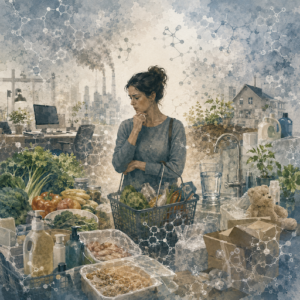
The emerging fertility crisis is therefore not only a biological or medical concern. It is also a moral, political, economic, and generational question: Who benefits from the chemicals society introduces, who bears the risks, and who is responsible when the consequences do not become visible until years—or generations—later?
Controlling Nature Often Brings Side Effects
On April 3, 1963, Rachel Carson participated in a CBS documentary.[8] The program also interviewed scientists who strongly opposed her conclusions, describing them as “gross distortions of the facts…unsupported by scientific experimental evidence and general practical experience.”[9] One critic warned that if society followed Carson’s teachings, humanity would “return to the dark ages” allowing insects, disease, and vermin “to inherit the earth.”[10]
Carson offered a fundamentally different perspective. She argued that “the balance of nature is a major force in the survival of man.”[11] She did this at a time when many scientists and industrial leaders instead believed progress depended upon humanity steadily “controlling nature.”[12]
In fact, humans have a terrible track record of controlling nature.
- Australian Cane Toads: In 1935, 101 cane toads were imported from Hawaii to Queensland, Australia, specifically to feast on cane beetles.[13] The singular, simple objective was to protect the Australian sugarcane crops that the beetles were eating.[14] But the toads did not effectively control the beetles and instead became a significant invasive species, causing harm to native wildlife, as well as pets. First, the toads didn’t really like eating cane beetles, so the cane beetles continued to destroy the crops.[15] Second, the toads loved eating nearly everything else – other insects and small animals[16] that were not supposed to be targeted. Third, the toads still do not have natural predators today. Instead, the toads cause the fatal poisoning of animals that try to eat them, causing “catastrophic declines”[17] in some populations of Australian animals – declines of more than 80%[18] or 90%[19] in some species – severely disrupting local ecosystems. The toads rapidly outcompete native animals for food and shelter.[20] Today, there is still no broad-scale solution for controlling cane toads,[21] and in affected areas they remain a common emergency veterinary concern for pets.[22] One thing is very clear: the intervention failed at its original purpose and created a new and severely costly ecological problem, one that has still not been solved today.

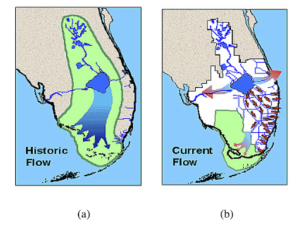
- Florida Everglades: In 1948, the state of Florida tried to control water through canals, levees, drainage, and flood-control systems. The primary purpose of the project was “flood control.”[23] Instead, what resulted was the destruction of “natural water filtration systems, reduced biodiversity,” and “major flooding events” in the surrounding areas.[24] The altered water flow over-drained some areas, flooded others, fragmented wetlands, damaged wildlife habitat, and helped create one of the largest ecosystem-restoration challenges in the world. In 2000, the “fix” for the problem was officially “the largest hydrologic restoration project ever undertaken in the United States.”[25]
One Side Effect of Our Chemical Environment appears to be Infertility
“Lifestyle factors such as…the presence of numerous reproductive toxicants in the environment, including air-borne pollutants, nanoplastics and electromagnetic radiation, are seriously compromising reproductive health…the public health implications for our species are potentially devastating.”[27]
2024 Aitken
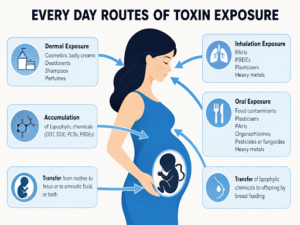
This is where Carson’s warning becomes newly relevant. “Contemporary human populations are exposed to thousands of synthetic chemicals entirely absent from ancestral environments.”[28] Exposure to complex mixtures of pesticides, plastics, bisphenols such as BPA, phthalates (PAEs), flame retardants, PFAS, PCBs and other potentially endocrine-disrupting compounds is now ubiquitous in the natural environment.[29]
Chemicals like these carry “profound unintended consequences for ecosystems and wildlife alike.”[30] Endocrine disrupting chemicals (EDCs) – those that interfere with hormones – are particularly disturbing. Hormones govern reproduction, fetal development, puberty, metabolism, and brain development. EDCs can mimic, block, or interfere with hormone action.
“Global Fertility Crisis”
Today, researchers increasingly describe a “global fertility crisis.[31,32,33]

“Reproductive health problems are partially linked to increasing human exposures to chemicals.”[34] Many chemicals can interfere with the hormonal signaling upon which fetal development, sexual maturation, ovulation, pregnancy, and sperm production depend.[35,36]
“These evolutionarily novel exposures intersect with the inherent epigenetic vulnerabilities of spermatogenesis,”[37] the biological process of sperm cell development. The average sperm concentration has declined by 51.6% between 1973 and 2018, a trend that has been speeding up since the year 2000.[38] While low sperm concentration is defined as less than 16 million/mL,[39] when count declines “past a threshold of 40–50 million/ml…the probability of conception drops off rapidly.”[40] Unfortunately, 2018 estimates found sperm concentration to already be 49.0 million/ml,[41] already within that conception reduction threshold.
Worse yet is that the trajectory is truly startling. The reference limit of the World Health Organization (WHO) is predicted to be reached “within the coming decades.”[42] A simple straight-line ai extrapolation from the findings in Levine 2022 would put average sperm concentration near zero around the mid-2040s – roughly 2045.[43]
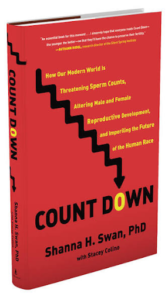
Altogether, this is why researcher Shanna Swan’s 2021 book, Count Down, is saying, “homo sapiens already fit the U.S. Fish and Wildlife Service’s standard to be considered an endangered species.”[44]
Although proving that a particular exposure caused a particular person’s infertility is extraordinarily difficult, animal studies, biological mechanisms, and human observational evidence increasingly point in the same direction.
“Population Collapse” is a Unique Threat
The commonly cited population replacement rate is 2.1 births per woman.[45] This is the amount of children each woman needs to have on average in order to sustain the population. (This number can be as high as 3.5 in countries with higher mortality rates.[46]) Amongst economically developed nations, the total fertility rate reached just 1.5 children per woman in 2022 – “well below the ‘replacement level’ of 2.1 children per woman.”[47] More than a quarter of the world population live in countries with a total fertility rate below 1.3.[48]

There are several reasons why a declining population could be a massive problem.[49,50]
- Economy: When there are fewer working-age people replacing those who retire, governments are forced to support more older adults with fewer taxpayers. This places growing pressure on pensions, health care, elder care, public services, and the overall economy.
- Elder Care: Every society depends on one generation raising the next—not only for economic productivity, but for care, continuity, and social stability. When fewer children are born, the question becomes unavoidable: who will care for the elderly, sustain families, and carry society forward?
- Social Implosion: Fewer children means fewer schools, fewer young families, fewer workers, fewer caregivers, and fewer people building the future. Communities can become older, smaller, less vibrant, and less resilient.
- Loss of Innovation: Younger generations often bring new ideas, energy, risk-taking, entrepreneurship, and adaptation. When societies have fewer young people, they may become more focused on preserving existing systems than imagining and building what comes next.
Infertility has Multiple Causes, and Chemical Exposure Is One Contributor
There are really two major challenges that are pointing toward the “population collapse” headline that is increasingly being discussed in world politics.
Challenge #1: People are choosing to have fewer children
Couples are having fewer children, having them later in life, or deciding not to have children at all. Researchers attribute much of this decline to economic insecurity, delayed family formation, changing relationships and attitudes toward parenthood, access to contraception, and a broader “crisis of confidence in the future.”[51]

Challenge #2: People’s ability to reproduce is declining
The second problem is biological: a growing body of evidence suggests that human fecundity – the physical capacity to reproduce – is also declining. As discussed, researchers report falling semen quality, increasing reliance on assisted reproduction, rising reproductive disorders, and declining rates of unassisted pregnancy.[52] In Denmark, for example, the proportion of births resulting from medically assisted reproduction has risen to more than 12%, while successive generations of women have experienced fewer unassisted conceptions.[53]
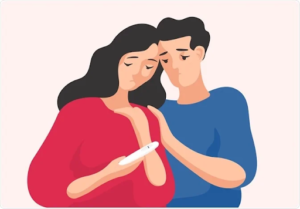
Understanding Terms |
|
| Fertility – the actual production of live births. | Infertility – inability to conceive or carry a pregnancy to term. |
| Fecundity – the capacity to have children | Sterility – the permanent biological inability to reproduce. |
| Helpful Hint #1: A healthy 25 year old woman with no children has a high fecundity, even though her current fertility is zero. | Helpful Hint #2: A 60-year-old woman who gave birth to six children earlier in life has high lifetime fertility. However, because she has gone through menopause, her current biological capacity to reproduce (fecundity) is now zero. |
If chemical exposures are weakening human reproductive capacity, then the fertility crisis is not only a matter of personal choice or cultural change. It is also a public-health and social-contract problem.
Fertility & Fecundity Challenges Interact
Economic and cultural conditions lead many couples to postpone parenthood, but delayed parenthood also exposes them more fully to any underlying decline in reproductive capacity. A woman attempting pregnancy later in life may confront age-related ovarian decline at the same time that her partner has poorer semen quality or both partners carry a lifetime burden of environmental exposures.
The emerging scientific concern is therefore not merely that people are choosing to have fewer children. It is that a growing number are unable to have the number of children they desire. One recent review reports that approximately one in six people worldwide experiences infertility and emphasizes that the financial, physical, and psychological burden remains disproportionately placed upon individuals – especially women – while access to diagnosis and treatment remains limited and unequal.[54]
Elected Officials and Policies are Not Protecting Us
“Decisive regulatory action underpinned by unconventional, interdisciplinary research collaborations will be needed to reverse the trends.”[55]
2021 Skakkebaek
Despite having a 60 year head start, and despite decades of warning signs and a growing body of scientific evidence, the practical response to the toxic environment has largely been transferred from public-health institutions to individual families. People are told to avoid plastics, buy organic food, filter their water, research personal-care products, test their homes, improve their lifestyles, freeze their eggs, or pay for fertility treatment. These may be prudent individual choices, but they are not a sufficient public-health strategy.

An individual cannot meaningfully avoid a chemical environment embedded in food packaging, drinking water, household dust, workplaces, building materials, agricultural systems, and products whose ingredients may not be fully disclosed.
Nor can parents prevent exposures that occurred before they understood the risk – or even before they themselves were born.
Nor can society continue spending decades identifying and restricting one harmful chemical, such as BPA, only to replace it with numerous closely related compounds that have been studied far less and may prove equally harmful – or even more so.
The Human-Nature Problem
Human beings respond most forcefully to threats that are immediate, visible, and easy to trace to a single cause. Chemical harm is often the opposite: exposure is more often low-dose, cumulative, and spread across years. The consequences emerge later as infertility, developmental disorders, ecological decline, or chronic diseases. How many cancers, neurodegenerative diseases, or metabolic diseases will ultimately be found to be chemically overwhelming the ability of the human body to heal itself?
People discount invisible risks. Companies externalize costs. Regulators move slowly. Parents feel overwhelmed. Philanthropy and nonprofits often find it easier to fund treatment after harm than prevention before harm.
By the time the pattern becomes undeniable, the products are widespread, the industries are entrenched, and proving responsibility is extraordinarily difficult. As a result, our institutions tend to reward short-term convenience and profit while postponing the biological costs to families, taxpayers, and future generations.
History offers painful examples of this pattern.
- Purdue Pharma continued profiting from OxyContin even after serious concerns and legal action over its addictive potential had emerged; the larger public reckoning came only after opioid dependence and overdose had spread across entire communities.[56]
- Asbestos followed a similar trajectory: its immediate usefulness and profitability were obvious, while the cancers and lung disease it caused often did not appear until decades later.

In both cases, the benefits were captured early and privately, while the biological, social, and financial costs were delayed and distributed across families and the public.[57]
The result is a profound failure of the social contract: society permits the widespread introduction of biologically active chemicals, while placing the burden of uncertainty, avoidance, illness, infertility, and treatment upon the people exposed to them.
The Broken Social Contract
The social contract breaks when people are exposed before they can choose: babies in utero, children, low-income families, workers, and future generations. This is not like choosing to smoke or eat junk food; exposure is embedded in air, water, food packaging, furniture, cosmetics, soil, and supply chains.
The burden of protection is then pushed onto individuals who lack the information, time, money, and practical ability to avoid these exposures. Families are told to read labels, buy safer products, filter their water, and pay more for cleaner food, while many of the relevant chemicals are poorly disclosed, inadequately studied, or nearly impossible to escape.

A functioning social contract should not require every parent to become a toxicologist simply to protect a child. It should require those who introduce chemicals into commerce to demonstrate reasonable safety, disclose meaningful risks, and bear responsibility when private profit creates public harm.
From Silent Spring to Silent Playgrounds

Fertility should not be framed only as “personal lifestyle,” “women waiting too long,” or “IVF access.”
It must also be framed as reproductive environmental justice: the right to conceive, carry, birth, and raise children in a less toxic world. In a society where every person is endowed with the unalienable rights to “Life, Liberty and the pursuit of Happiness,” those promises ring hollow if the basic conditions for creating and sustaining life are quietly compromised before a child is born.
Protecting reproductive health is not merely a medical goal; it is part of preserving the freedom of future generations to live, to flourish, and to build the families they hope for.
We must change the responsibility and remedy. It must also be revealed why some communities face heavier exposures because of where they live, the work they perform, the products they can afford, or the water and air available to them.
When the ability to protect reproductive health depends upon income, education, geography, or occupational privilege, infertility is no longer only a private medical problem. It becomes a question of whether society is distributing environmental risk fairly – and whether every family has a genuine opportunity to create and raise healthy children.
“The balance of nature is built of a series of interrelationships between living things…and their environment. You can’t just step in with some brute force and change one thing without changing many others.”[58]
Rachel Carson
Action Steps for Our Political Leaders
The solution is not to wait until every chemical has caused enough visible harm to justify action. Political leaders must fund and build the missing middle between scientific discovery and public protection – the institutions that translate emerging evidence into practical safeguards before damage becomes widespread.
First, governments should invest in research-translation and public education. Findings from reproductive biology, toxicology, endocrinology, and environmental health can be converted into clear public-health guidance and policy recommendations, so that scientific knowledge does not remain trapped in academic journals while families struggle to understand what exposures matter.
Second, we need independent chemical testing that is not primarily financed or controlled by the industries selling the products.
Third, governments must strengthen legal and regulatory advocacy: Manufacturers should bear greater responsibility for demonstrating reasonable safety and disclosing meaningful risks.
Fourth, public policy should create market incentives for safer products. The government can subsidize or give tax benefits & grants for the products that are proven safe.
Fifth, every community should have access to maternal and child exposure-reduction programs. These could include safer drinking water, lead and pesticide screening, occupational protections, healthier housing, prenatal environmental-health counseling, and targeted support for communities carrying the greatest exposure burden.
Sixth, we need independent journalism in the tradition of Silent Spring – continued reporting that connects scientific findings, corporate decisions, regulatory failures, and human consequences. Rachel Carson did more than describe a chemical problem; she made an invisible pattern visible to the public. The coming generation needs journalists, scientists, and storytellers willing to do the same.
Who Really Makes This Kind of Change Happen?
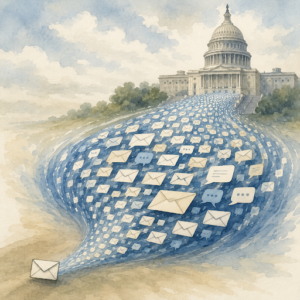
None of these reforms will happen automatically. They will require organized voters, parent groups, medical societies, independent scientists, public-interest lawyers, investigative journalists, responsible investors, and philanthropists to repeatedly pressure Congress, state legislatures, public-health agencies, and government purchasing bodies. That pressure must be specific and persistent.
One message feels small. But thousands of clear, repeated messages become political pressure.
This will be a difficult battle. It is important to acknowledge that money buys access, the corporations have lots of money invested in keeping things as they are. However, organized citizens can also create serious consequences. When enough people speak clearly, repeatedly, and publicly, they can make political inaction more costly than industry opposition.
Mothers Against Drunk Driving: MADD began as a grassroots movement of grieving families, not a wealthy industry. Through persistent public testimony, organizing, media attention, and pressure on lawmakers, it helped change public attitudes and strengthen drunk-driving laws, including the nationwide minimum drinking age of 21. It became one of the most influential public-health advocacy movements in modern U.S. history.[59]
Superfund Law: In the 1970s, residents of a Niagara Falls neighborhood discovered that their homes and school had been built near a massive chemical-waste dump. Local mothers and families organized, documented illnesses, attracted journalists, confronted officials, and repeatedly demanded relocation and government action. They did not have the resources of the chemical industry or government, but their persistence turned a local contamination crisis into a national issue. The public pressure surrounding Love Canal helped spur passage of the federal Superfund law, which created a national system for cleaning up hazardous-waste sites.[60]
Big Tobacco vs Public Health: Tobacco companies spent billions on advertising and political influence, yet decades of pressure from physicians, parents, public-health advocates, journalists, lawyers, and state officials eventually produced smoking restrictions, advertising limits, public education campaigns, lawsuits, and the 1998 Master Settlement Agreement. Public pressure did not defeat industry money quickly, but it steadily changed what politicians, courts, and businesses could continue to defend.[61]
Remember Our Power
Money cannot always withstand a large, persistent, morally credible public movement. The lesson is not that one letter defeats millions of dollars. It is that thousands of voices really can change the political cost of inaction as lawmakers find it harder to ignore the public than to disappoint an industry.
“Never doubt that a small group of thoughtful, committed citizens can change the world.
Indeed, it is the only thing that ever has.”
-Margaret Mead
American cultural anthropologist, author and scientist, mid 20th century
Make Your Voice Count
Reforms like this can happen when elected officials hear repeatedly from the people they represent. You do not need to be an expert or write a perfect letter. A brief, respectful message asking for specific action can help show that reproductive and environmental health matter to voters.
Step 1: Find your federal and state representative:
Do a Google search for “Who are my federal and state representatives?” followed by your home address or ZIP code. Use an official government result whenever possible.
Step 2: Copy & paste this message, adding your name and zip code:
Subject: Please strengthen protections for reproductive and environmental health
| Dear Representative,
I am writing as a constituent to ask you to support stronger protections from chemicals that may affect fertility, pregnancy, childhood development, and long-term health. Please support legislation that requires stronger safety testing before chemicals are widely used, protects public-health agencies from industry influence, improves disclosure of chemical risks, and places more responsibility on manufacturers to demonstrate safety. I also ask you to support independent research, public education, safer-product incentives, and exposure-reduction programs for pregnant women, children, workers, and highly exposed communities. Families should not have to become toxicology experts or carry the full burden of avoiding chemicals embedded throughout modern life. Please let me know what actions you are taking to protect reproductive health and reduce harmful chemical exposure. Sincerely, |
—————————–
If you love fun & research-based guidance as a fitness professional, or during your own pregnancy & postpartum, please check out these Fit For Birth offerings:
- For Fitness & Wellness Professionals:
- FREE 2-hour CEC
- CEC/CEU Courses, including our Pre & Postnatal Corrective Exercise Specialist (PPCES), the world’s first holistic perinatal CEC/CEU!
- Monthly Elite Membership – Community. Monthly education. Business mentorship & work opportunities. $27/month.
- For Pregnancy, Pre-conception & Postpartum:
- For Longevity:
REFERENCES
[1] 2013, April 18. Pesticides – DDT – Rachel Carsion – Silent Spring. NV at CEPImperial Youtube. Retrieved 7/11/26 from https://www.youtube.com/watch?v=Ipbc-6IvMQI&t=311s
[2] (n.d.) Conlon, Joseph. DDT: Rise and Fall of a Miracle. Retrieved 7/11/26 from http://www.gamosquito.org/resources/2006meeting/jconlonddt.pdf
[3] (n.d.) Encylclopedia.com Retreived 7/11/26 from https://www.encyclopedia.com/history/united-states-and-canada/us-history/silent-spring
[4] (n.d.) Olga Owens Huckins: The Journalists Whose Letter Sparked the Silent Spring Revolution. The Daily Gardener. Retrieved 7/11/26 from https://thedailygardener.org/ota20210129/
[5] 2024. Wang, et al. Emerging contaminants: A One Health Perspective. The Innovation. Science Direct. Retrieved 7/14/26 from https://www.sciencedirect.com/science/article/pii/S266667582400050X
[6] 2024. Wang, et al. Emerging contaminants: A One Health Perspective. The Innovation. Science Direct. Retrieved 7/14/26 from https://www.sciencedirect.com/science/article/pii/S266667582400050X
[7] 2022. Xu, et al. Environmental pollution, a hidden culprit for health issues. Eco-Environment & Health. Retrieved 7/14/26 from https://pmc.ncbi.nlm.nih.gov/articles/PMC10702928/
[8] (n.d.) THe Silent Spring of Rachel Carson. IMBD. Retrieved 7/11/26 from https://www.imdb.com/title/tt0962224/
[9] 2013, April 18. Pesticides – DDT – Rachel Carsion – Silent Spring. NV at CEPImperial Youtube. Retrieved 7/11/26 from https://www.youtube.com/watch?v=Ipbc-6IvMQI&t=311s
[10] 2013, April 18. Pesticides – DDT – Rachel Carsion – Silent Spring. NV at CEPImperial Youtube. Retrieved 7/11/26 from https://www.youtube.com/watch?v=Ipbc-6IvMQI&t=311s
[11] 2013, April 18. Pesticides – DDT – Rachel Carsion – Silent Spring. NV at CEPImperial Youtube. Retrieved 7/11/26 from https://www.youtube.com/watch?v=Ipbc-6IvMQI&t=311s
[12] 2013, April 18. Pesticides – DDT – Rachel Carsion – Silent Spring. NV at CEPImperial Youtube. Retrieved 7/11/26 from https://www.youtube.com/watch?v=Ipbc-6IvMQI&t=311s
[13] (n.d.) Cane Toads. Meet the Invaders. Invasive Species Control. Retrieved 7/14/26 from https://invasives.org.au/meet-the-invaders/cane-toads/
[14] (n.d.) Introduction of Can Toads. National Museum Australia. Retrieved 7/14/26 from https://www.nma.gov.au/defining-moments/resources/introduction-of-cane-toads
[15] (n.d.) Cane Toads. Meet the Invaders. Invasive Species Control. Retrieved 7/14/26 from https://invasives.org.au/meet-the-invaders/cane-toads/
[16] (n.d.) Cane Toads. Meet the Invaders. Invasive Species Control. Retrieved 7/14/26 from https://invasives.org.au/meet-the-invaders/cane-toads/
[17] 2015. Jolly et al. The impact of invasive cane toads on native wildlife in southern Australia. Ecology and Evolution. Retrieved 7/14/26 from https://pmc.ncbi.nlm.nih.gov/articles/PMC4588653/
[18] (n.d.) Ecological impacts of invasive cane toads. Ecological Society of Australia. Retrieved 7/14/26 from https://www.ecolsoc.org.au/?hottopic-entry=ecological-impacts-of-invasive-cane-toads
[19] (n.d.) Cane Toads. Meet the Invaders. Invasive Species Control. Retrieved 7/14/26 from https://invasives.org.au/meet-the-invaders/cane-toads/
[20] (n.d.) Cane Toad. Britannica. Retrieved 7/14/26 from https://www.britannica.com/animal/cane-toad
[21] 2021. The cane toad (Bufo marinus) – fact sheet. Australian Government. Department of Climate Change, Energy, the Environment and Water. Retrieved 7/14/26 from https://www.dcceew.gov.au/environment/invasive-species/publications/factsheet-cane-toad-bufo-marinus
[22] 2026. Cane toads and dogs (everything you need to know about toad poisoning). Animal Emergency Service. Retrieved 7/14/26 from https://animalemergencyservice.com.au/blog/cane-toads-and-dogs/
[23] (n.d.) Florida water management history 1900-1949. St. Johns River Water Management District. Retrieved 7/14/26 from https://www.sjrwmd.com/history/1900-1949/
[24] 2025, Aug. 11. Hoskins, Levi. Florida Environmental History – History of Everglades Restoration. Florida Museum. Retrieved 7/14/26 from https://www.floridamuseum.ufl.edu/earth-systems/blog/florida-environmental-history-history-of-everglades-restoration/
[25] (n.d.) Hydrologic Activity. Everglades National Park Florida. National Park Service. Retrieved 7/14/26 from https://www.nps.gov/ever/learn/nature/hydrologicactivity.htm
[26] Image. The Everglades Wetlands. Introduction to Sustainability Science. Retrieved 7/14/26 from https://zahachtah.github.io/ItSS/cases/The-Everglades/
[27] 2024. Aitken, Robert John. What is driving the global decline of human fertility? Need for a multidisciplinary approach to the underlying mechanisms. Frontiers in Reproductive Health. Retrieved 7/11/26 from https://www.frontiersin.org/journals/reproductive-health/articles/10.3389/frph.2024.1364352/full
[28] 2026. Enver Kerem Dirican. Evolutionary and epigenetic drivers of the global trajectory of sperm count decline: an integrative framework for male reproductive health. Reproductive Biomedicine Online. Retrieved 7/14/26 from https://www.sciencedirect.com/science/article/abs/pii/S147264832600338X
[29] 2024. Pan et al. The adverse role of endocrine disrupting chemicals in the reproductive system. Frontiers in Endocrinology. Retrieved 7/11/26 from https://www.frontiersin.org/journals/endocrinology/articles/10.3389/fendo.2023.1324993/full
[30] 2017. Frederick Rowe Davis. Insecticides, agriculture, and the Anthropocene. Global Environment. Retrieved 7/11/26 from https://www.liverpooluniversitypress.co.uk/doi/pdf/10.3197/ge.2017.100105?download=true
[31] 2025. Carneiro, Marcia Mendonca. The fertility crisis: looking below the tip of the iceberg. Women & Health. Retrieved 7/11/26 from https://www.tandfonline.com/doi/full/10.1080/03630242.2025.2521905
[32] 2026. Sobotka, Tomas. The global fertility freefall: trends, drivers, and uncertainties. Reproductive BioMedicine Online. Retrieved 7/11/26 from https://www.sciencedirect.com/science/article/abs/pii/S147264832600372X
[33] 2026. Lindahl-Jacobson, et al. Evidence that declining human fecundity contributes to the fertility crisis. Fertility and Sterility. Retrieved 7/11/26 from https://www.sciencedirect.com/science/article/pii/S0015028225019958
[34] 2021. Skakkebaek, et al. Environmental factors in declining human fertility. Nature Reviews Endocrinology. Retrieved 7/11/26 from https://www.nature.com/articles/s41574-021-00598-8
[35] 2024. Sakali et al. Environmental factors affecting female fertility. Endocrine. Retrieved 7/11/26 from https://link.springer.com/article/10.1007/s12020-024-03940-y
[36] 2022. Kumar & Kant Singh. Impact of environmental factors on human semen quality and male fertility: a narrative review. Environmental Sciences Europe. Retrieved 7/11/26 from https://link.springer.com/article/10.1186/s12302-021-00585-w
[37] 2026. Enver Kerem Dirican. Evolutionary and epigenetic drivers of the global trajectory of sperm count decline: an integrative framework for male reproductive health. Reproductive Biomedicine Online. Retrieved 7/14/26 from https://www.sciencedirect.com/science/article/abs/pii/S147264832600338X
[38] 2022. Levine et al. Temporal trends in sperm count: a systematic review and meta-regression analysis of samples collected globally in the 20th and 21st centuries. Human Reproduction Update. Retrieved 7/14/26 from https://academic.oup.com/humupd/article/29/2/157/6824414
[39] 2025. Lovett, et al. A prospective study of semen quality and fecundability among North American couples planning pregnancy. Andrology. Retrieved 7/14/26 from https://onlinelibrary.wiley.com/doi/abs/10.1111/andr.70084
[40] 2022. Levine et al. Temporal trends in sperm count: a systematic review and meta-regression analysis of samples collected globally in the 20th and 21st centuries. Human Reproduction Update. Retrieved 7/14/26 from https://academic.oup.com/humupd/article/29/2/157/6824414
[41] 2022. Levine et al. Temporal trends in sperm count: a systematic review and meta-regression analysis of samples collected globally in the 20th and 21st centuries. Human Reproduction Update. “Using SC model estimates of 101.2 million/ml in 1973 and 49.0 million/ml in 2018, SC declined among unselected men by 1.16% per year and 51.6% overall” Retrieved 7/14/26 from https://academic.oup.com/humupd/article/29/2/157/6824414
[42] 2026. Enver Kerem Dirican. Evolutionary and epigenetic drivers of the global trajectory of sperm count decline: an integrative framework for male reproductive health. Reproductive Biomedicine Online. Retrieved 7/14/26 from https://www.sciencedirect.com/science/article/abs/pii/S147264832600338X
[43] Ai analysis. As of 7/14/26, this figure is not yet being used in the scientific data.
[44] 2021. Swan, Shanna, PhD. Count Down: How our modern world is threatening sperm counts, altering male and female reproductive development and imperilling the future of the human race. BOOK Website. Retrieved 7/14/26 from https://www.shannaswan.com/countdown
[45] 2020. Gietel-Basten, et al. Exploring the True Value of Replacement Rate Fertility. Population Research and Policy Review. Retrieved 7/14/26 from https://link.springer.com/article/10.1007/s11113-019-09561-y
[46] 2003. Espenshade, et al. The surprising global variation in replacement fertility. Population Research and Policy Review. Retrieved 7/14/26 from https://link.springer.com/article/10.1023/B:pOPU.0000020882.29684.8e
[47] 2024. Society at a Glance 2024: OECD Social Indicators. OECD. Retrieved 7/14/26 from https://www.oecd.org/en/publications/society-at-a-glance-2024_918d8db3-en/full-report/fertility-trends-across-the-oecd-underlying-drivers-and-the-role-for-policy_770679b8.html
[48] 2026. Sobotka, Tomas. The global fertility freefall: trends, drivers, and uncertainties. Reproductive BioMedicine Online. Retrieved 7/11/26 from https://www.sciencedirect.com/science/article/abs/pii/S147264832600372X
[49] 2026. Allen, Liz. Birth rates are declining in most of the world—here’s why it really matters. Phys Org. Retrieved 7/14/26 from https://phys.org/news/2026-06-birth-declining-world.html
[50] 2014. Lee, et al. Is low fertility really a problem? Population aging, dependency, and consumption. Science. Retrieved 7/14/26 from https://www.science.org/doi/abs/10.1126/science.1250542
[51] 2026. Sobotka, Tomas. The global fertility freefall: trends, drivers, and uncertainties. Reproductive BioMedicine Online. Retrieved 7/11/26 from https://www.sciencedirect.com/science/article/abs/pii/S147264832600372X
[52] 2026. Lindahl-Jacobson, et al. Evidence that declining human fecundity contributes to the fertility crisis. Fertility and Sterility. Retrieved 7/11/26 from https://www.sciencedirect.com/science/article/pii/S0015028225019958
[53] 2026. Lindahl-Jacobson, et al. Evidence that declining human fecundity contributes to the fertility crisis. Fertility and Sterility. Retrieved 7/11/26 from https://www.sciencedirect.com/science/article/pii/S0015028225019958
[54] 2025. Carneiro, Marcia Mendonca. The fertility crisis: looking below the tip of the iceberg. Women & Health. Retrieved 7/11/26 from https://www.tandfonline.com/doi/full/10.1080/03630242.2025.2521905
[55] 2021. Skakkebaek, et al. Environmental factors in declining human fertility. Nature Reviews Endocrinology. Retrieved 7/11/26 from https://www.nature.com/articles/s41574-021-00598-8
[56] 2022. Gale, Arthur. Sacklers Sacked But Purdue Still Caused Opioid Epidemic. Missouri Medicine. Retrieved 7/11/26 from https://pmc.ncbi.nlm.nih.gov/articles/PMC9339402/
[57] 1991. D E Lilienfeld. The silence: the asbestos industry and early occupational cancer research – a case study. American Journal of Public Health. Retrieved 7/11/26 from https://pmc.ncbi.nlm.nih.gov/articles/PMC1405162/
[58] 2013, April 18. Pesticides – DDT – Rachel Carsion – Silent Spring. NV at CEPImperial Youtube. Retrieved 7/11/26 from https://www.youtube.com/watch?v=Ipbc-6IvMQI&t=311s
[59] 2006. Fell & Voas. Mothers Against Drunk Driving (MADD): the first 25 years. Traffic Injury Prevention. Retrieved 7/14/26 from https://pubmed.ncbi.nlm.nih.gov/16990233/
[60] (n.d.) Love Canal. Wikipedia. Retrieved 7/14/26 from https://en.wikipedia.org/wiki/Love_Canal
[61] 2015. Cole & Fiore. The war against tobacco: 50 years and counting. JAMA. Retrieved 7/14/26 from https://pmc.ncbi.nlm.nih.gov/articles/PMC4465196/